

Developers can buy biodiversity net gain units from a habitat bank or landowner offering legally secured off-site habitat creation or enhancement. The process involves identifying the development’s biodiversity shortfall using the statutory biodiversity metric, finding suitable units, agreeing on a purchase and ensuring those units are registered and formally allocated to the development before its Biodiversity Gain Plan is approved.
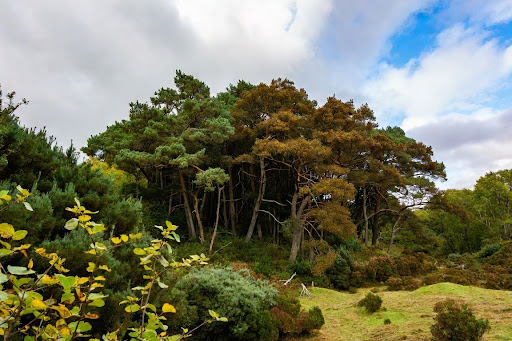
Under the Environment Act 2021, most qualifying developments in England must achieve at least a 10% Biodiversity Net Gain (BNG). Where this cannot be delivered entirely within the development site, purchasing off-site biodiversity units can provide a compliant solution.
For developers seeking suitable units, Civity’s off-site BNG units for sale provide access to habitat creation and enhancement opportunities across England, supported by ecological expertise and an understanding of the planning process.
However, purchasing biodiversity units involves more than finding an available quantity. Habitat types, trading rules, spatial risk, legal agreements and allocation requirements all influence whether particular units are suitable for a development.
What Are Biodiversity Net Gain Units?
Biodiversity Net Gain units are a standardised measure of biodiversity value calculated using the statutory biodiversity metric. They represent the ecological value of habitats and the improvements achieved through habitat creation or enhancement, allowing developers to demonstrate measurable biodiversity gains as part of the planning process.
The metric considers factors including habitat type, area or length, distinctiveness, condition and strategic significance. For habitat creation and enhancement, it also accounts for factors such as time to target condition and delivery difficulty.
There are three separate categories of biodiversity units: area habitat units, hedgerow units and watercourse units.
These categories are calculated independently and are not directly interchangeable.
For example, a development affecting a species-rich grassland may need to secure suitable area habitat units, while the loss of a hedgerow may create a separate hedgerow unit requirement.
Importantly, one biodiversity unit does not equal one hectare of land. The number of units generated depends on the ecological characteristics of the habitat and the improvements being delivered.
Why Do Developers Need to Buy Off-Site Biodiversity Units?
Developers may need to purchase off-site biodiversity units when their proposed development cannot achieve its required Biodiversity Net Gain through habitat retention, creation or enhancement within the development boundary.
Since 12 February 2024, mandatory BNG has applied to most qualifying planning permissions in England, with exemptions and subsequent changes to the rules for certain developments.
The requirement means a development must achieve a biodiversity value at least 10% greater than its pre-development baseline, subject to the relevant metric calculations and habitat trading requirements.
The government’s guidance on making on-site biodiversity gains explains the Biodiversity Gain Hierarchy, which establishes the order in which different BNG delivery options should be considered.
For most qualifying developments, this means prioritising on-site habitat delivery before using off-site biodiversity units, with statutory biodiversity credits reserved as a last resort.
However, from 6 August 2026, qualifying minor developments that are not otherwise exempt can consider on-site and off-site delivery simultaneously and may choose off-site units without first demonstrating that on-site delivery is unsuitable.
This distinction is particularly relevant to smaller development projects where available space, site constraints or long-term management arrangements may make off-site delivery more practical.
The Biodiversity Gain Hierarchy is also separate from the National Planning Policy Framework’s mitigation hierarchy, which addresses the avoidance, mitigation and compensation of biodiversity harm. Purchasing BNG units does not remove the need to address protected species, irreplaceable habitats or other ecological impacts appropriately.
How Do Developers Calculate How Many BNG Units They Need?
Developers determine their biodiversity unit requirements by using the statutory biodiversity metric to compare the development site’s existing biodiversity value with its proposed post-development value. The calculation identifies whether the scheme meets its BNG target and, where necessary, the type and quantity of additional off-site units required.
A qualified ecologist will normally assess the existing habitats and prepare the biodiversity metric calculations for the development.
The assessment establishes the site’s baseline biodiversity value, considers habitat losses and proposed on-site improvements, and calculates the remaining shortfall.
The metric separates area, hedgerow and watercourse units, so developers may need to purchase multiple habitat types to satisfy their requirements.
For example, a development could achieve its required area habitat gain through landscaping but still need additional hedgerow units to address the loss of existing boundary vegetation.
The statutory biodiversity metric also applies habitat trading rules, which influence the type of replacement habitat that can be used.
A developer cannot necessarily compensate for the loss of a valuable habitat by purchasing a larger quantity of lower-distinctiveness units.
This is why the completed metric output is an essential starting point when requesting quotations from biodiversity unit providers.
At Civity, we interpret the statutory biodiversity metric calculations supplied by a developer’s ecological team to identify suitable off-site unit options and provide quotations. If the development’s requirements change, we can also provide revised quotations to reflect the updated shortfall.
Where Can Developers Buy Biodiversity Net Gain Units?
Developers can buy biodiversity net gain units directly from habitat banks, landowners or specialist BNG providers offering legally secured habitat creation and enhancement. Units may also be advertised through biodiversity marketplaces, although the provider and gain site must still satisfy the relevant legal, registration and allocation requirements.
Buying directly from a habitat bank can provide access to information about available habitat types, location, unit values and delivery arrangements.
Habitat banks are areas of land where existing habitats are enhanced or new habitats are created to generate biodiversity units for sale.
Land managers may establish habitat banks on agricultural land, former commercial sites or other suitable land, provided the proposed ecological improvements satisfy the relevant requirements.
For example, habitat creation projects may involve restoring species-rich grassland, improving existing woodland, creating wetlands or enhancing hedgerow networks.
Civity’s available BNG units include habitat bank opportunities in different parts of England, allowing developers to explore potential sources based on their location and ecological requirements.
Developers can also use the Government’s Biodiversity Gain Sites Register to review registered gain sites and recorded allocations.
However, registration does not automatically mean units remain available for purchase. Availability, habitat suitability and commercial terms should be confirmed directly with the relevant provider.
How Does the Process of Buying BNG Units Work?
The process of buying BNG units involves confirming the development’s ecological requirements, identifying suitable off-site habitats, agreeing commercial terms and ensuring the purchased units are formally allocated to the development. The allocation must be recorded on the national register before the local planning authority can approve the Biodiversity Gain Plan.
1. Complete the Biodiversity Metric Assessment
The developer’s ecological consultant assesses the proposed development and calculates the biodiversity units required to achieve the relevant BNG target.
The completed metric establishes the required habitat categories and identifies any remaining off-site shortfall.
2. Identify Suitable Off-Site Units
The developer or BNG provider searches for units that satisfy the development’s habitat requirements.
This involves considering habitat type, trading rules, location, spatial risk and unit availability.
Early enquiries can be particularly useful where the development requires less commonly available habitat types.
3. Request a Quotation and Agree on Commercial Terms
Once suitable units have been identified, the provider can issue a quotation based on the required quantities and habitat categories.
The developer and seller agree on the purchase terms, which may include deposits, reservation arrangements and payment milestones.
4. Confirm the Legal and Registration Arrangements
Off-site biodiversity gains must be secured through an appropriate legal agreement and recorded on the National Biodiversity Gain Sites Register.
The agreement establishes the obligations for habitat creation, enhancement, management and monitoring over the required period. In Civity’s case, we take on the entirety of the creation, enhancement management and monitoring requirement; meaning the purchase is quick and simple for the developer with no ongoing involvement necessary.
5. Record the Allocation to the Development
The land manager, or an authorised party acting with the land manager’s permission, applies to Natural England to allocate the agreed units to the development.
The allocation links the biodiversity gains to the specific development project. The relevant reference numbers are cited in the Biodiversity Gain Plan to prove the link and demonstrate how legitimate units are being delivered offsite.
6. Submit the Biodiversity Gain Plan.
Following planning permission, the developer submits the Biodiversity Gain Plan to the local planning authority.
The plan must include the relevant biodiversity metric calculations and evidence of any registered off-site gains allocated to the development.
The authority must approve the plan before development can commence.
How Much Do Biodiversity Net Gain Units Cost?
Civity’s current pricelist for units we provide is available here: https://civitynge.com/bng-units-for-sale/
The cost of biodiversity net gain units depends on habitat type, location, availability, ecological distinctiveness, long-term management requirements and market demand. There is no single fixed price for privately traded off-site BNG units, so developers should request quotations based on their specific biodiversity metric requirements.
A project requiring several common habitat units may have different costs from one needing a smaller quantity of scarce, high-distinctiveness habitat units.
The location of the habitat bank can also affect the effective value of units through the statutory metric’s spatial risk calculation.
Other commercial factors include the cost of establishing and maintaining habitats, legal agreements, monitoring obligations and the timing of unit delivery.
Where several habitat types are required, the total cost will depend on the combination of units needed rather than a single price per unit.
Government statutory biodiversity credit prices should not be treated as benchmark prices for the private BNG market. They operate under a separate last-resort mechanism.
For a more accurate estimate, developers should provide the completed biodiversity metric, the development location and details of any expected changes to their BNG strategy when requesting a quotation.
Why Does the Location of Off-Site BNG Units Matter?
The location of off-site BNG units matters because the statutory biodiversity metric applies a spatial risk multiplier to reflect the geographical relationship between the development and the habitat gain site. Units sourced further away may contribute less towards the development’s BNG requirement, increasing the quantity that needs to be purchased.
Under the current statutory metric guidance, spatial risk for area and hedgerow habitats considers local planning authority boundaries and National Character Areas. Purchasing units ‘in area’ applies no spatial risk; adjacent area applies a 0.75x multiplier; and further than adjacent applies a 0.5 x multiplier. This means that a developer purchasing units in a further-than-adjacent area will need to purchase twice as many for the same overall net gain value.
Units within the same local planning authority area or National Character Area receive the most favourable spatial risk treatment and are generally more attractive to local authorities who may have local planning policies favouring offsets with lower distance between the development site and offsite habitat compensation.
Watercourse units are assessed using relevant catchment geography rather than local planning authority boundaries and national Character Areas.
Spatial risk is separate from strategic significance, which considers whether habitat creation or enhancement supports identified local nature recovery priorities.
For example, a habitat bank delivering species-rich grassland within a mapped Local Nature Recovery Strategy (LNRS) measure may qualify for high strategic significance where the proposed habitat and location meet the relevant requirements.
This can support larger-scale habitat restoration aligned with local ecological priorities.
Developers should therefore assess both spatial risk and strategic significance rather than selecting units solely because they appear geographically close or commercially attractive.
What Are the Habitat Trading Rules for BNG Units?
Habitat trading rules determine which habitat gains can compensate for particular habitat losses. They are designed to prevent developers from replacing more ecologically valuable habitats with unsuitable lower-value alternatives, even where the total number of biodiversity units appears sufficient.
The rules operate within the statutory biodiversity metric and depend on habitat distinctiveness and classification. Habitats which are rarer, more inherently valuable, and/or more difficult to recreate, tend to have higher distinctiveness. The trading rules help prevent such habitats from being lost in favour of less valuable ones.
For example, the loss of certain higher-distinctiveness habitats may require the creation or enhancement of the same habitat type or another permitted habitat that satisfies the trading requirements.
This means a development requiring grassland units cannot automatically substitute woodland units simply because woodland units are available.
Where a project affects multiple habitat types, the developer’s ecologist must confirm that the proposed combination of on-site and off-site gains satisfies the trading rules.
Irreplaceable habitats, such as ancient woodland, require separate treatment. Their loss cannot simply be addressed through the standard 10% BNG calculation and may require bespoke compensation arrangements under the relevant planning framework.
Checking habitat suitability before purchasing units helps reduce the risk of selecting gains that cannot be used within the final Biodiversity Gain Plan.
Do Off-Site Biodiversity Units Need to Be Registered?
Yes. Off-site biodiversity units used to meet mandatory BNG requirements must come from a biodiversity gain site registered on the National Biodiversity Gain Sites Register, with the relevant units formally allocated to the development.
The register is maintained by Natural England and records information about legally secured habitat gains.
Registration requires appropriate supporting information, including the legal agreement, habitat management arrangements and biodiversity metric calculations.
The allocation process then identifies which units from the registered gain site are assigned to a particular development.
This prevents the same biodiversity gains from being allocated more than once.
A developer may agree to purchase or reserve units before registration is complete, but the necessary registration and allocation must be in place before the Biodiversity Gain Plan can be approved.
Developers should therefore confirm the registration status and expected allocation timescales when discussing unit purchases with a provider.
What Legal Agreements Are Required When Buying BNG Units?
Off-site biodiversity gains must be secured through a legal agreement that establishes the habitat creation, enhancement, maintenance and monitoring obligations for at least 30 years. The agreement is generally a Section 106 planning obligation with a local planning authority or a conservation covenant with an authorised responsible body.
The agreement secures the ecological commitments attached to the habitat bank and identifies who is responsible for delivering them.
A Habitat Management and Monitoring Plan (HMMP) supports these arrangements by describing the intended habitat outcomes, management activities, monitoring requirements and corrective measures where necessary.
The minimum 30-year period begins when the relevant habitat enhancement works are completed, as defined in the legal agreement. Habitat creation or enhancement can begin before units are allocated, and allocation may also occur before the works are completed.
Where a developer purchases units from an existing legally secured habitat bank, the developer does not normally need to enter into a separate legal agreement for that off-site land.
Instead, the habitat bank’s legal arrangements have already been agreed with the relevant authorities as part of the registration process to establish the long-term management responsibilities.
This can make purchasing existing off-site units more practical than acquiring and managing separate land, although developers remain responsible for ensuring their own development meets its planning and BNG obligations.
Can Developers Change Their BNG Unit Allocation After Purchase?
Changing a formal allocation of off-site biodiversity units can be complicated and should not be treated as a routine amendment. Once units have been allocated to a development and linked to its planning permission, developers should regard that allocation as effectively final.
Crucially, an allocation cannot be amended while it relates to an existing condition of planning permission.
Evidence must be provided showing that the relevant planning permission conditions are no longer in place, potentially including confirmation from the approving local planning authority.
The process therefore involves resolving the planning position with the local planning authority and applying to Natural England for the appropriate register amendment.
This creates both administrative and commercial risk where a development’s biodiversity metric changes after units have already been allocated.
Developers should confirm the habitat types, trading rules, spatial requirements and unit quantities before completing a formal allocation.
Where designs are still evolving, obtaining revised quotations or discussing reservation arrangements can provide greater flexibility than prematurely finalising an unsuitable allocation.
When Must Developers Purchase BNG Units?
Developers do not necessarily need to purchase off-site biodiversity units before submitting their planning application. However, the required units must be formally allocated to the development before the local planning authority can approve its Biodiversity Gain Plan, and that approval must be obtained before development begins.
The Biodiversity Gain Plan is normally submitted after planning permission has been granted.
The local planning authority generally has eight weeks to determine the submitted plan.
This period is not a deadline requiring developers to submit the plan within eight weeks of receiving planning permission.
Early consideration of BNG requirements is nevertheless important.
If a development requires scarce habitat types, waiting until the final stages of the planning process may limit availability or create unexpected costs.
Developers can also face delays where a habitat bank has not yet completed its legal agreement, registration or allocation arrangements.
Reviewing unit requirements during the planning process allows developers to understand the likely cost and availability of off-site options before committing to the final BNG strategy.
What Is the Difference Between BNG Units and Statutory Biodiversity Credits?
Off-site BNG units are biodiversity gains generated by legally secured habitat creation or enhancement projects, while statutory biodiversity credits are purchased from the government as a last-resort mechanism where suitable on-site and off-site options cannot deliver the required gain.
Private biodiversity units are linked to identifiable habitat gain sites and must be registered and allocated to the development.
Statutory biodiversity credits operate through a separate government purchasing process.
Developers must provide evidence explaining why suitable on-site and off-site solutions are unavailable before purchasing statutory credits.
A spatial risk multiplier of 0.5 applies to statutory credits, meaning two statutory credits are required for every one biodiversity unit that needs to be compensated.
The government publishes separate prices for different habitat categories. These prices are subject to review and should not be confused with the commercial price of off-site biodiversity units.
Developers can consult the official statutory biodiversity credit prices when evaluating the last-resort option.
However, purchasing suitable off-site units directly from a habitat bank will generally be the more relevant route to explore before considering government credits.
How Can Civity Help Developers Purchase BNG Units?
Civity helps developers source off-site biodiversity units that align with their completed statutory biodiversity metric requirements, habitat trading rules and development location. By combining ecological knowledge with an expanding network of habitat bank opportunities, we help developers understand their available options and obtain quotations for suitable units.
Our BNG services for developers focus on identifying appropriate off-site solutions without requiring developers to establish and manage their own habitat banks.
Once a developer’s ecological team has completed the biodiversity metric assessment, we can review the resulting off-site requirements and identify potentially suitable habitat units.
This includes considering the relevant habitat types, spatial risk, strategic significance and availability.
Where the development’s requirements change, we can provide updated quotations to reflect revised metric outputs.
Our ecological expertise also informs the development of habitat banks, where Civity undertakes ecological assessments to identify opportunities for habitat creation and enhancement.
These projects can support local nature recovery through improvements such as species-rich grassland restoration, hedgerow enhancement and other habitat measures suited to the land.
By connecting habitat bank delivery with developer demand, we help make the process of securing suitable biodiversity units more accessible.
Secure the Right Biodiversity Net Gain Units for Your Development
Buying biodiversity net gain units is an important part of the planning process for developments that cannot meet their full BNG requirement on-site.
The most effective approach begins with a completed statutory biodiversity metric, followed by a review of suitable off-site habitat types, spatial risk, trading rules and availability.
Developers should also understand the legal and registration requirements before finalising a purchase, particularly because amending an existing allocation can be difficult once it is connected to planning permission.
Planning ahead can help reduce uncertainty over costs, unit availability and Biodiversity Gain Plan approval.
At Civity, we help developers identify suitable off-site BNG units and provide quotations based on their ecological requirements.
Whether your project is at an early planning stage or you already have a completed biodiversity metric showing an off-site shortfall, contact Civity to discuss available biodiversity units and the next steps towards meeting your BNG requirements.