

The government has announced a new Biodiversity Net Gain (BNG) exemption for brownfield residential developments on sites up to 1.5 hectares in England. Confirmed in the Autumn Budget on 28 October 2026, the proposed change aims to reduce development costs, simplify planning requirements and accelerate housing delivery on previously developed land.
However, the exemption is not yet in force. The Government has confirmed its intention to introduce the change, but the final eligibility criteria, implementation timetable and supporting legislation have not yet been published.
For developers planning residential projects on brownfield land, understanding the proposed exemption is important for managing planning applications, biodiversity requirements and future development costs.
Until the new rules take effect, qualifying developments must continue to comply with existing BNG legislation. Developers who still require off-site biodiversity units can explore Civity’s Biodiversity Net Gain services for developers to understand the options available for meeting their planning obligations.
What Is the New BNG Exemption for Brownfield Residential Sites?
The new BNG exemption is a planned change to England’s planning regulations that will remove mandatory Biodiversity Net Gain requirements for qualifying residential developments on brownfield sites measuring up to 1.5 hectares. Announced in the Autumn Budget 2026, the exemption is intended to reduce the financial and administrative burden of developing previously used land.
Under the existing Biodiversity Net Gain framework, most qualifying developments in England must deliver at least a 10% increase in biodiversity value. This is measured using the statutory biodiversity metric, which assesses the ecological value of habitats before and after development.
Developers who cannot achieve the required improvement on-site may need to purchase off-site biodiversity units or, as a last resort, statutory biodiversity credits.
The proposed brownfield exemption would remove this mandatory requirement for eligible residential schemes, potentially reducing ecological assessment, habitat delivery and biodiversity unit procurement costs.
The Autumn Budget 2026 confirms the government’s intention to introduce the exemption as part of its wider strategy to support housebuilding.
Which Brownfield Residential Developments Could Qualify?
The proposed exemption is intended to cover residential developments on brownfield sites measuring up to 1.5 hectares in England. However, the government has not yet published the final legal definition of eligible developments, meaning developers cannot assume that every previously developed residential site below this threshold will automatically qualify.
Brownfield land generally refers to previously developed land, such as former industrial premises, commercial sites or land previously occupied by buildings and associated infrastructure.
However, the planning definition of previously developed land includes exclusions, and a site being described as brownfield does not necessarily establish eligibility for the proposed exemption.
The government has indicated that the change will support both private and council housebuilding.
Several important details remain unconfirmed, including how the exemption will apply to mixed-use schemes, developments involving multiple land parcels and sites containing ecologically valuable habitats.
The final regulations will need to establish how qualifying residential development is defined and how the 1.5-hectare threshold is assessed.
Developers should therefore avoid making assumptions about eligibility until the government publishes the detailed rules.
When Will the Brownfield BNG Exemption Come Into Effect?
The implementation date for the new brownfield BNG exemption has not yet been announced. Although the government confirmed the policy in October 2026, it has stated that the full consultation response, impact assessment and implementation timetable will be published in due course.
This distinction is particularly important for developers with planning applications already being prepared or considered by local planning authorities.
An announcement in the budget does not automatically amend the legislation governing mandatory biodiversity net gain.
Until the relevant regulations take effect, developments that do not qualify for an existing exemption must continue to meet the current BNG requirements.
The Defra consultation on a targeted brownfield residential exemption was published in April 2026. It sought views on the proposed exemption, appropriate site-size thresholds and how eligible developments should be defined.
The Government confirmed in September that it was analysing the consultation responses, with a full response to follow.
Developers should monitor the publication of that response and the subsequent legislation before changing their biodiversity strategies.
How Does the Proposed Exemption Differ From Existing BNG Rules?
The proposed brownfield exemption would introduce a specific exemption for qualifying residential developments on previously developed land up to 1.5 hectares. It differs from the existing exemption for developments of 0.2 hectares or less, which has applied to eligible planning applications submitted from 6 August 2026, provided they do not negatively affect on-site priority habitats.
The existing 0.2-hectare exemption is not limited to brownfield residential development. It applies to qualifying developments that satisfy its statutory conditions.
The proposed 1.5-hectare exemption would cover a larger area threshold but would be targeted specifically at brownfield residential sites.
For example, a proposed housing development on a 0.15-hectare site may already qualify for the existing exemption if the relevant conditions are satisfied.
A residential brownfield development covering 1 hectare would not qualify for that exemption based on site size alone but could potentially benefit from the new policy once implemented.
The Government’s guidance on BNG exemptions explains the exemptions currently in force.
The proposed change should not be confused with the separate introduction of mandatory BNG for Nationally Significant Infrastructure Projects, which took effect on 2 November 2026 under a different consenting framework.
Why Is the Government Introducing a Brownfield BNG Exemption?
The government is introducing the brownfield BNG exemption to support housing delivery by reducing costs and simplifying planning requirements for smaller residential developments on previously developed land. The policy reflects its preference for prioritising brownfield development while seeking to make the planning system more proportionate.
Brownfield housing projects can involve additional costs associated with demolition, contamination, site preparation and existing infrastructure.
Where mandatory BNG applies, developers must also assess the site’s biodiversity value and establish how the required ecological improvements will be delivered.
For constrained sites, opportunities for on-site habitat creation may be limited, increasing reliance on off-site biodiversity units.
Removing the mandatory BNG requirement for qualifying schemes could reduce these costs and administrative requirements.
However, the policy also raises questions about its potential impact on nature recovery.
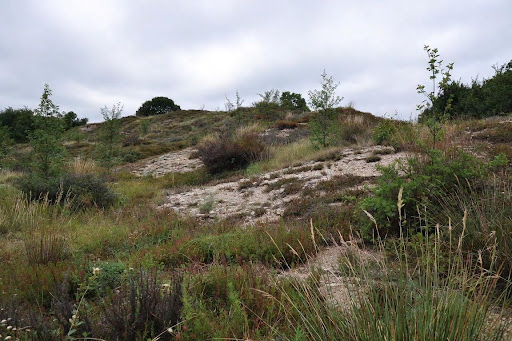
Brownfield sites are not necessarily ecologically unimportant. Some previously developed land supports valuable grassland, scrub and open mosaic habitats that provide important conditions for wildlife.
The final policy will need to clarify how the exemption interacts with existing ecological protections and planning safeguards.
Will Brownfield Developers Still Need Ecological Surveys?
Developers may still need ecological surveys even if their residential brownfield site becomes exempt from mandatory Biodiversity Net Gain. A BNG exemption would remove the statutory 10% biodiversity gain requirement for qualifying schemes, but it would not automatically remove other planning obligations relating to protected species, important habitats or ecological impacts.
For example, a former industrial site may contain vegetation, abandoned buildings or areas of undisturbed land that provide habitat for protected species.
Depending on the site, ecological surveys may be required to identify potential impacts on bats, breeding birds, reptiles or other wildlife.
A preliminary ecological appraisal can help establish existing ecological constraints and determine whether further surveys are necessary.
Developers must also consider relevant requirements under wildlife legislation and national planning policy.
The presence of previously developed land does not remove these responsibilities.
Consequently, even where a project qualifies for the proposed exemption, appropriate ecological assessment may still be necessary to support the planning application.
What Does the Exemption Mean for Developers With Existing Planning Applications?
Developers with existing or forthcoming planning applications should continue following the current BNG requirements unless their project already qualifies for an exemption in force. The government has not confirmed whether the proposed brownfield exemption will apply to applications already submitted, permissions already granted or only applications made after a future commencement date.
This uncertainty creates a practical challenge for developers managing pipeline sites.
A project approaching submission may currently require a completed biodiversity metric calculation and a strategy for achieving the statutory 10% net gain.
If the new exemption is introduced before the application is submitted, the project’s requirements could potentially change, depending on the final transitional provisions.
However, delaying an application solely in anticipation of the exemption could create additional programme and commercial risks.
Developers should review their planning timetable, confirm the existing requirements with their planning consultants and avoid assuming that previously secured biodiversity obligations will automatically disappear.
Where a project still requires BNG, the developer must follow the relevant planning process, including securing any necessary off-site gains before the Biodiversity Gain Plan can be approved.
Will Developers Still Need to Purchase Off-Site Biodiversity Units?
Developers whose projects qualify for the future brownfield exemption would no longer need to purchase off-site biodiversity units solely to satisfy the mandatory 10% BNG requirement. However, developments outside the exemption, including larger residential brownfield schemes and other qualifying projects, will continue to require biodiversity improvements under the applicable legislation.
Off-site biodiversity units remain an important option where developers cannot deliver their full biodiversity requirement within the development site.
These units are generated through habitat creation or enhancement on other land, with the ecological improvements legally secured and maintained for at least 30 years.
For developers managing projects that remain subject to BNG, suitable units must satisfy the statutory biodiversity metric, habitat trading rules and relevant geographical considerations.
Civity works with developers to identify suitable off-site biodiversity units using the requirements established by their appointed ecologists.
Although the proposed exemption may reduce demand from some smaller brownfield housing schemes, the wider BNG framework will continue to apply to many residential, commercial and infrastructure developments.
What Should Developers Do While Waiting for the Final Rules?
Developers should continue assessing their projects against existing BNG legislation while monitoring the government’s response to the brownfield consultation. For sites that may qualify for the proposed exemption, reviewing the development area, land-use history, ecological constraints and planning timetable will help identify whether the forthcoming changes could affect the project’s requirements.
It is also important to distinguish between confirmed policy and requirements that have already become law.
The 1.5-hectare threshold has been announced, but the detailed eligibility criteria and transitional arrangements remain outstanding.
For developments that are likely to remain subject to BNG, early ecological planning and consideration of off-site biodiversity units can help reduce uncertainty.
Developers should also continue identifying ecological constraints, even where they anticipate benefiting from the exemption.
This allows project teams to respond to the final regulations without overlooking existing wildlife protection and planning responsibilities.
How Can Civity Support Developers During the BNG Changes?
Civity helps developers understand their off-site Biodiversity Net Gain options by identifying suitable biodiversity units based on completed ecological metric calculations. As BNG requirements evolve, developers can use this support to assess available units, review project-specific requirements and obtain quotations where off-site delivery remains necessary.
The proposed brownfield exemption may change the obligations for some residential projects, but it does not remove the need for biodiversity planning across the wider development sector.
For schemes that remain subject to mandatory BNG, the availability of suitable units, habitat trading rules and location can influence both compliance and costs.
Civity works with landowners to establish habitat banks and provides developers with access to off-site biodiversity unit opportunities.
If you are planning a residential development and need to understand your existing BNG obligations or explore off-site options, contact Civity to discuss your project’s requirements.
The key takeaway is that the new brownfield BNG exemption has been announced, but developers must wait for the final legislation and implementation date before treating eligible residential schemes as exempt.