

Mandatory biodiversity net gain is now a central part of the planning process in England, and it affects most development projects. If you are bringing forward a development proposal, you will almost certainly need a Biodiversity Gain Plan. This blog explains what the Biodiversity Gain Plan is, why it matters, and how it fits into biodiversity net gain requirements in a way that is straightforward but technically accurate.
At Civity, we work with developers, landowners, and local planning authority teams to deliver biodiversity gains that are lawful, measurable, and viable.
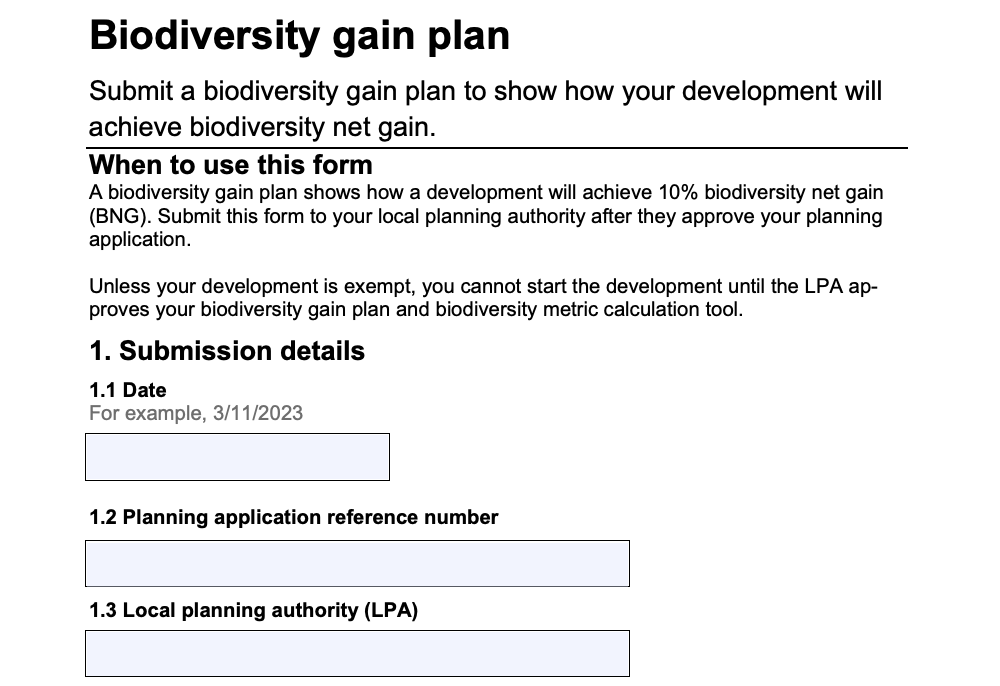
The Biodiversity Gain Plan is the document that brings all of this together:
Understanding Biodiversity Net Gain
Biodiversity net gain, often shortened to biodiversity net gain (BNG), is a statutory requirement introduced through the Environment Act 2021 and embedded in planning law. In simple terms, it means that most development subject to the regulations must leave biodiversity in a better state than it was before. The expected outcome is at least a ten per cent net gain in biodiversity value compared with the baseline biodiversity value on the development site.
The policy is designed to ensure that development does not merely compensate for habitat lost but actively contributes to habitat creation, habitat enhancement, and wider local nature recovery strategies. The final measure of success is expressed through biodiversity units calculated using the Defra biodiversity metric and the statutory biodiversity metric.
What is the Biodiversity Gain Plan (BGP)?
The Biodiversity Gain Plan, sometimes called a ‘gain plan’, is the formal statement submitted to local planning authorities. They use it to show how a proposed development will achieve the biodiversity gain objective. It is a simple pro forma to which documents like your BNG metric, HMMP and o… are appended. It is required to discharge the biodiversity gain condition that applies automatically to relevant planning permissions. Even when planning permission is granted, development cannot start until the local planning authority has approved the biodiversity gain plan. For this reason, the BGP is not an optional extra. It is a legal gateway in the development process.
If you are looking for “What is the biodiversity gain plan (BGP): a simple guide”, the simplest way to think about it is this. The plan pulls together all of the BNG information for the project, allowing a consolidated final sign-off point before works commence. It pulls together all of the BNG information for the project, allowing a consolidated final sign-off point before works commence, and sets out your starting biodiversity value, your post-development biodiversity value, how you will deliver net gain on-site or off-site, and how you will manage and monitor those habitats for the long term.
When the gain plan is needed
A Biodiversity Gain Plan and the documents appended to it are typically prepared during the planning process and submitted either alongside proposed site plans (in draft or outline status) and/or after consent as a finalised document for sign-off pre-commencement, depending on the planning authority’s preference. In reality, most developers prepare it early because biodiversity net gain matters at the determination stage, and authorities need confidence that biodiversity net gain requirements can be met. We would recommend that large, non-contentious or complex projects (e.g., projects where you are also creating your own on-site habitats) prepare an outline BGP as part of the submission for the local authority’s comment, whereas simple and small projects can wait until the post-consent stage to prepare and submit their BGP.
Phased developments have their own approach, and the gain plan must explain how biodiversity outcomes will be delivered and tracked across each phase of post-development delivery.
Baseline biodiversity and existing habitats
Every biodiversity gain plan starts with baseline biodiversity. This means identifying, mapping and describing existing habitats within the development site and any other habitats functionally linked to it. The baseline habitats are assessed by habitat type, habitat condition, ecological importance, species diversity, and habitat distinctiveness. This produces the pre-development biodiversity value, sometimes referred to as baseline biodiversity value. That baseline value is the benchmark against which post-development value will be measured.
Getting this stage right is critical. If baseline biodiversity is under-surveyed or poorly described, the biodiversity metric calculation becomes unreliable and can cause delays later in the planning authority review.
Biodiversity metric calculation and biodiversity units
Biodiversity net gain is measured using a statutory biodiversity metric. The biodiversity metric converts habitat area into biodiversity units by weighting it for distinctiveness, condition and strategic significance. Once the baseline biodiversity units are calculated, the same metric is used to predict post-development biodiversity units based on your proposed development and your habitat management proposals.
Your Biodiversity Gain Plan must show a clear comparison between pre-development biodiversity and post-development biodiversity. It needs to demonstrate that the post-development biodiversity value is at least ten percent higher than the baseline biodiversity value after the metric applies its rules on habitat risk, time to target condition, and delivery multipliers.
Following the biodiversity gain hierarchy
The regulations require developers to apply the biodiversity gain hierarchy. The plan must show that you have first avoided harm to habitats where possible, then reduced unavoidable impacts, then delivered significant on-site gains through on-site habitat or on-site habitat creation and habitat enhancement. Only when on-site measures cannot reach the net gain target should the plan rely on off-site units. Purchasing statutory biodiversity credits, also known as biodiversity credits purchased through Natural England, is intended to be the last resort.
Local planning authorities expect a clear narrative here. They want to understand not only the final metric numbers but also how the development proposal was shaped to avoid and minimise habitat loss and how the on-site habitat design contributes to net gain.
On-site and off-site biodiversity units
Many developments can achieve net gain with on-site measures alone, especially if habitat categories are integrated early into the proposed site plans. Where this is not possible, the plan can include off-site biodiversity units. These may come from habitat banks, off-site habitat projects, or other land managed specifically for biodiversity value uplift. The Biodiversity Gain Plan must confirm how any off-site biodiversity units will be secured and recorded on the biodiversity gain site register.
Because off-site units must be legally secured for thirty years, the plan also needs to explain the legal agreements that will govern delivery and habitat management.
Irreplaceable habitats and special cases
Some habitat types are classed as irreplaceable habitats. These are treated differently within biodiversity net gain regulations and cannot be simply offset through standard biodiversity metric calculation. If irreplaceable habitats are present, the plan must identify them and explain how impacts will be avoided or managed in line with current guidance. The same applies to priority habitats and any habitat type that carries higher strategic significance through local nature recovery strategies.
Long-term habitat management and monitoring
Biodiversity net gain is not achieved at the point of construction. It is achieved through long-term ecological performance. That is why every Biodiversity Gain Plan needs a monitoring plan and a habitat management approach covering at least thirty years. This section should explain how habitats will be created or enhanced, how condition targets will be reached, how post-development biodiversity will be monitored, and what corrective actions will be taken if progress falls short. If purchasing units from a registered offset provider like Civity, the monitoring plan and habitat management scheme will have already been created, secured and approved as part of their registration.
This is also where you set out whether management is delivered through onsite habitat stewardship, contracted ecologists, a habitat bank operator, or another delivery partner. Local planning authorities will not approve a plan that lacks credible long-term governance.
Legal agreements and planning obligations
To secure a net gain, the Biodiversity Gain Plan must reference the legal mechanism that binds delivery. This usually takes the form of planning obligations under section 106, but it may also include a conservation covenant or other legally enforceable arrangement. The plan should show how the development process will guarantee the maintenance of biodiversity enhancements and how compliance will be demonstrated to the planning authority over time.
Why a good BGP matters
The Biodiversity Gain Plan is the bridge between policy and practical delivery. A well-prepared gain plan reduces planning risk, supports faster discharge of conditions, and provides a clear route to achieving measurable biodiversity gains. It can also unlock design value by turning habitat creation into an asset of the development, rather than a constraint.
Conversely, a weak plan often forces reliance on off-site units or statutory biodiversity credits because on-site potential was not explored early enough. That can increase cost, extend timelines, and reduce the wider ecological benefit that biodiversity net gain is intended to deliver.
Final thoughts
Biodiversity net gain is now a mainstream planning requirement, and the Biodiversity Gain Plan is the document that proves compliance. It brings together baseline biodiversity, biodiversity metric outputs, the biodiversity gain hierarchy, on-site and off-site biodiversity units, long-term habitat management, and legal agreements into a single, enforceable strategy.
If your project needs support with statutory biodiversity metric work, biodiversity metric calculation, habitat distinctiveness assessment, or the preparation of a planning-ready Biodiversity Gain Plan, Civity can help you deliver a solution that is robust, efficient, and aligned with local planning authorities and Natural England expectations.
Disclaimer
This blog is intended as a general guide to biodiversity net gain requirements and the Biodiversity Gain Plan process in England. It does not constitute legal advice. Rules include exemptions, transitional provisions, and site-specific factors such as irreplaceable habitats that may affect your obligations. You should always confirm requirements with your planning authority and qualified ecological advisers before finalising your development proposal.